Voltech Smart Home

KNX Smart Home Installation in Tenerife
KNX design, installation and ETS6 programming for villas, apartments and holiday rentals, by a certified KNX Partner based in Costa Adeje.
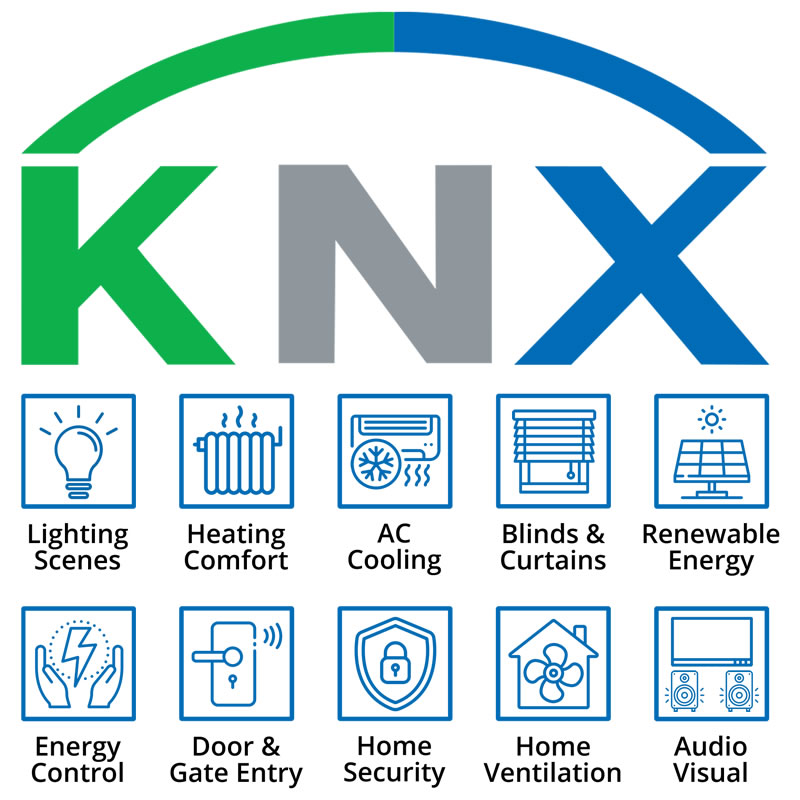
Voltech Smart Home designs, installs and programs KNX systems for villas, apartments and holiday rentals across south Tenerife. Dominik Kostienko is a certified KNX Partner with over 8 years of experience in KNX, CCTV and electrical work, and programs every project in ETS6. Based in Costa Adeje, working in English.
What KNX controls in your home
- Lighting: dimming, scenes, timers, presence detection and soft night lighting.
- Blinds, shutters and awnings: by time, sun and wind.
- Climate: air conditioning and underfloor heating room by room, with limits for guests.
- Security: alarm, CCTV and video door entry on one system, with one “away” button.
- Energy: solar PV, batteries and EV charging, with load control and consumption per circuit.
- Pool and garden: pumps, lighting and irrigation on schedules.
- Control: one app and wall touch panels for everything.
Why KNX and not Wi-Fi gadgets
- Wired and local. It keeps working when the internet or the Wi-Fi drops.
- Open standard. More than 8,000 certified products from over 500 manufacturers work together (KNX Association). You are never tied to one brand or one app.
- Serviceable. Every KNX system is programmed in the same tool, ETS, so any KNX Partner can maintain it.
- Built to last. A KNX installation lasts for decades, and a wired system is something buyers and renters notice.
KNX is worth planning before first fix, not bolting on after. If you’re renovating or building new, get in touch early through our contact page so we can design it in from the start.
New build, renovation or retrofit
New build or full renovation: the green KNX bus cable goes in at first fix, next to the power cables. This is the best moment.
Retrofit without breaking walls: wireless KNX RF push buttons and sensors, and KNX IP, connect to the existing installation.
Holiday rentals: air conditioning that switches off when guests leave, temperature limits and energy reports for owners and property managers.
How a KNX project works
- Call or WhatsApp: tell us about the property and what you want to control.
- Site visit: we check the electrical installation, the rooms and your priorities.
- Design and written quote: device list, brands, functions and price, before any work starts.
- Installation and ETS6 programming: tested room by room.
- Handover: training, app set-up and documentation.
KNX brands we work with
We program KNX-certified devices from any manufacturer, for example ABB, Gira, Jung, MDT, Schneider Electric, Siemens and Theben.
Areas we cover in Tenerife
South Tenerife: Costa Adeje, Adeje, La Caleta, San Eugenio, Playa de las Américas, Los Cristianos, Arona, Palm-Mar, Callao Salvaje, Guía de Isora, San Miguel de Abona and Golf del Sur. Larger projects anywhere in Tenerife.
KNX questions
How much does a KNX smart home cost?
It depends on the number of rooms and functions. We quote from a device list after the site visit, so you only pay for what you use.
Does KNX need the internet?
No. Switches, scenes and schedules run locally on the bus. The internet is only needed to control the house from outside with the app.
Can KNX control my existing air conditioning?
Usually yes, through a KNX gateway made for your A/C brand. We check the model at the site visit.
Can you take over a KNX system someone else installed?
Yes. With the ETS project file it is quick. Without it, we diagnose the system and rebuild what is needed. See KNX support and reprogramming.
Which languages do you speak?
English and Polish. In writing, also Spanish.
Planning a new build, renovation or upgrade? WhatsApp +34 690 195 750 or email info@voltechsmarthome.com.

Voltech Smart Home is proudly powered by WordPress